
How to Clean Retainers and Aligners the Right Way
Pull your trays out right now and hold them up to the light. A cloudy film, white crust along the edges, or a smell you would rather not describe means your cleaning routine is not working. Learning how to clean retainers and aligners properly takes about 2 minutes a day, and it is the difference between trays that stay invisible and trays that turn yellow, scratched, and swampy.
Quick Answer
Rinse with lukewarm water every time you remove your trays, brush once daily with a non-abrasive foaming cleaner, and deep clean 1 to 2 times per week. Never use hot water, whitening toothpaste, or colored mouthwash on clear trays.
In This Guide
Section 01
Why Trays Turn Cloudy, Yellow, and Smelly
Clear aligners sit against your teeth for 20 to 22 hours a day. Retainers spend every night in a warm, wet environment with zero airflow. That is close to a perfect incubator.
Within hours of wear, a thin bacterial layer called biofilm coats the inside of the tray. Left alone, biofilm does 3 things:
It clouds the plastic
That hazy look is not water spotting. It is a living film bonded to the surface.
It hardens into white crust
Minerals in saliva calcify the biofilm into tartar. Once it hardens, no soak fully removes it.
It produces odor
Bacterial waste concentrates inside the tray, then transfers back onto your teeth every time you reinsert it.
22
hours worn daily
2 min
daily routine
120
applications per bottle
A dirty tray presses trapped bacteria, plaque, and acids directly against your enamel for hours at a time. Wearers of clear trays have a higher risk of white spot stains and decay when trays are not cleaned daily, because the plastic blocks saliva from doing its natural rinsing job.
Cleaning the tray is not cosmetic maintenance. It is protecting the teeth you are paying to straighten.
Section 02
6 Things That Quietly Ruin Retainers and Aligners
Most tray damage comes from cleaning them the wrong way, not from skipping cleaning. Avoid all 6 of these.
Whitening or regular toothpaste
Nearly all toothpaste contains abrasives that carve thousands of micro-scratches into soft thermoplastic. Scratches scatter light, making trays look permanently cloudy, and each groove becomes a trench where bacteria hide.
Hot water
Aligners and clear retainers are heat-formed plastic. Water above roughly 100 degrees Fahrenheit can warp the fit. A warped aligner stops moving teeth on schedule. Always use lukewarm or cool water.
Colored mouthwash
Dyes in blue and green rinses absorb into clear plastic and tint it permanently. Alcohol-based rinses can also dry out and weaken the material over time.
Soaking tablets used carelessly
Many tablets rely on persulfates, which the FDA has warned can trigger allergic reactions when residue is not fully rinsed away. Tablets also require 15 or more minutes of soak time, impractical twice a day.
Bleach, alcohol, or vinegar at full strength
Harsh chemicals degrade thermoplastic and leave residues you do not want in your mouth. Diluted white vinegar has a narrow rescue use for mineral crust, but it is not a routine.
Tossing trays in a pocket or napkin
Dry, exposed trays collect lint and bacteria, and napkins are how most aligners end up in the trash. Store them in a vented case, always.
Note: If a tray is already warped or cracked, no cleaner can fix it. Contact your aligner provider about a replacement before problems compound.
See what a purpose-built tray cleaner looks like
No abrasives. No peroxide. Made in the USA.
Section 03
How to Clean Retainers and Aligners in 5 Steps
This is the daily routine. It takes about 2 minutes and works for every clear tray on the market.
Rinse immediately after removal
Every single time the tray leaves your mouth, rinse it under lukewarm water for 10 seconds. This washes away saliva before biofilm can bond to the plastic.
Apply a non-abrasive foaming cleaner to a soft brush
Use a dedicated soft-bristle brush. Foam flows into corners, attachment wells, and gumline edges that bristles alone cannot reach.
Brush gently for 30 seconds
Inside surfaces first, then outside. Light pressure. You are lifting film, not scouring a pan.
Rinse and inspect
Hold the tray to the light. It should look glassy, not hazy. Rinse your mouth before reinserting so you are not sealing food debris under the tray.
Deep clean 1 to 2 times per week
Give trays a longer foam-and-brush session, paying attention to edges and any white buildup starting to form. Store overnight retainers in a vented case, fully dry.
Consistency beats intensity. A gentle 2-minute clean every day outperforms an aggressive scrub once a week.
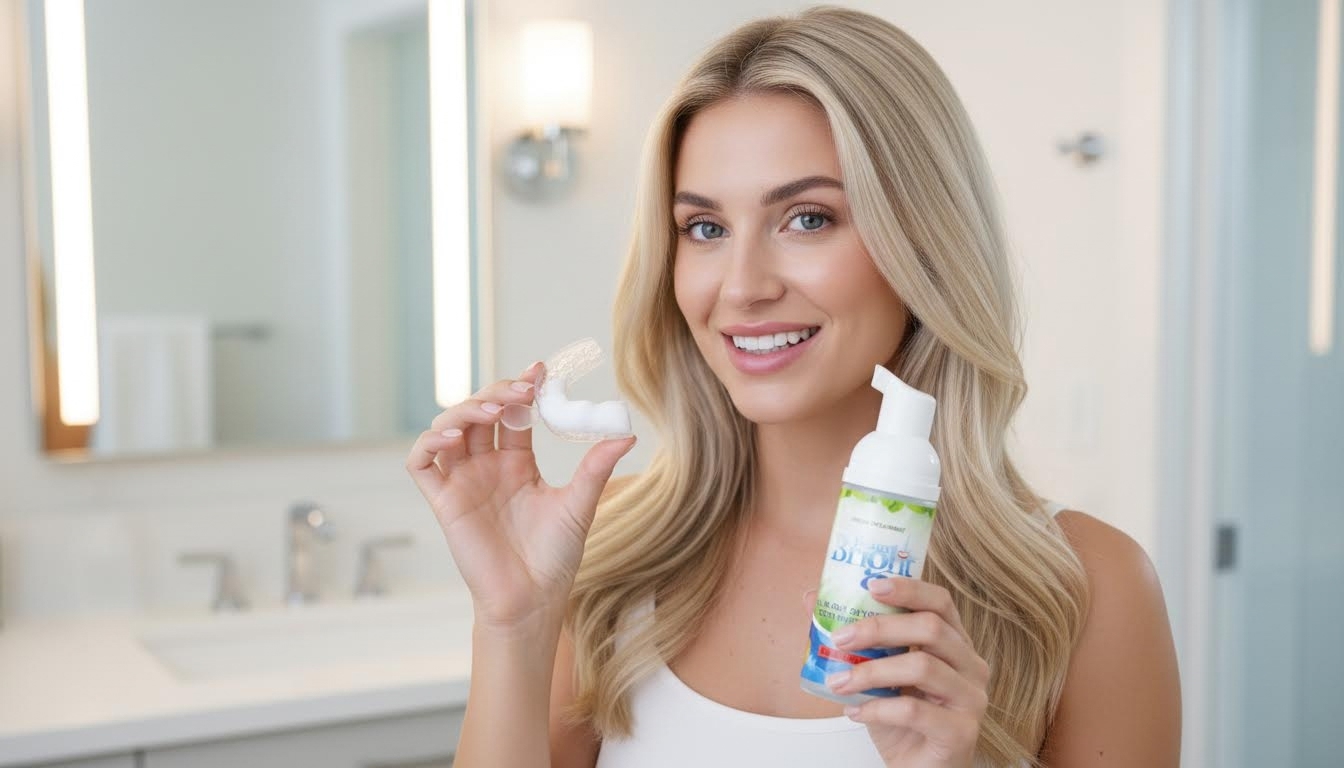
FoamBright by BleachBright
The only cleaner built for this exact routine
Non-abrasive. Peroxide free. Cleans your trays and whitens your teeth in 1 pass. Made in the USA.
Section 04
Foam vs Tablets vs Soap vs Toothpaste
| Method | Time | Abrasive | On the go | Bottom line |
|---|---|---|---|---|
| Foaming cleaner BEST | 1 to 2 min | No | Yes | Daily driver. Cleans trays and teeth in 1 step |
| Soaking tablets | 15 to 30 min | No | No | Fine weekly, impractical daily, persulfate caution |
| Clear unscented soap | 2 min | No | Rarely | Works in a pinch, taste lingers |
| Toothpaste | 2 min | Yes | Yes | Never on trays. Scratches cause permanent cloudiness |
Daily cleaning has to be fast and gentle or it will not happen. That is why foam has become the default recommendation: it is non-abrasive by design and fits inside the 2 brushing sessions you already do.
A remineralizing enamel pen like StarBright pairs well with a tray routine for wearers who also want to keep their smile bright between changes.
Section 05
Cleaning Tips by Brand: Invisalign, Byte, Candid, and More
The daily routine above works for every brand. These are the details that differ.
Invisalign
How to clean Invisalign trays
Invisalign trays are especially sensitive to heat, so lukewarm water only. Most Invisalign plans include attachment buttons bonded to teeth, so foam matters more here: it flows around attachment wells where bristles cannot reach. Clean at every swap and daily in between.
Byte
How to clean Byte aligners
Byte trays tend to run thinner and lighter, which makes them faster to clean but easier to warp with rough handling. Brush with light pressure, support the tray in your palm rather than pinching it, and never boil or steam it.
Candid
How to clean Candid aligners
Candid wearers typically photograph trays for remote monitoring, and cloudy trays make scans harder to read. A daily foam clean keeps trays camera-clear. Same lukewarm-water, no-toothpaste rules apply.
ClearCorrect & Others
How to clean ClearCorrect and other aligners
ClearCorrect and most other systems use similar thermoplastics. Same rules: rinse at every removal, foam daily, no heat, no abrasives, no dyes.
Retainers
How to clean wire and clear retainers
Clear Essix-style retainers follow the aligner routine exactly. Hawley retainers are tougher but should still avoid hot water and harsh soaks that corrode the metal wire. Fixed bonded retainers stay in your mouth, so a foam that reaches under the wire and between teeth does the job a paste cannot.
Section 06
The 2-Minute FoamBright Routine
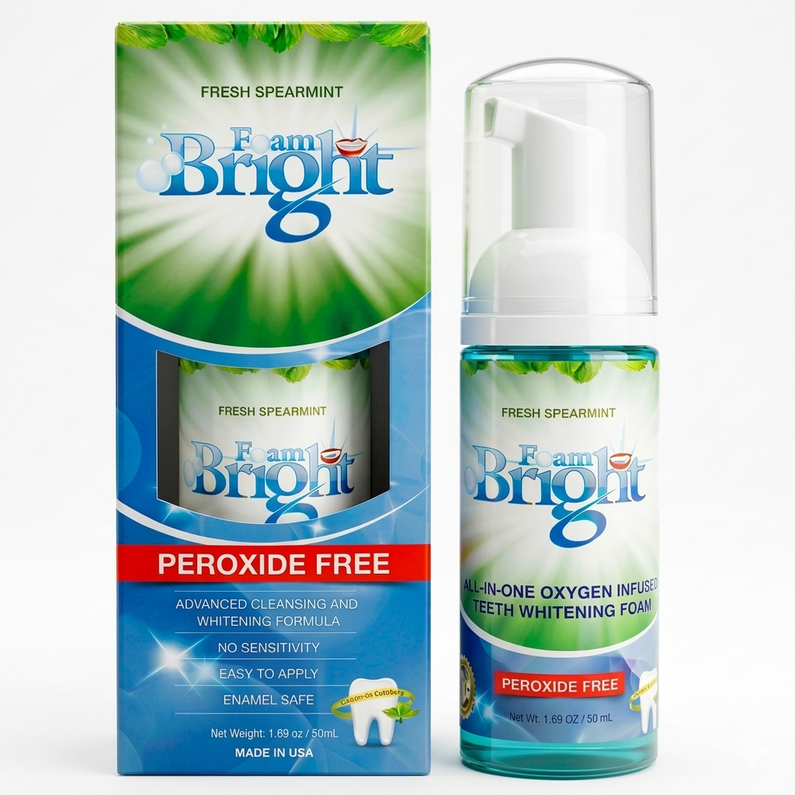
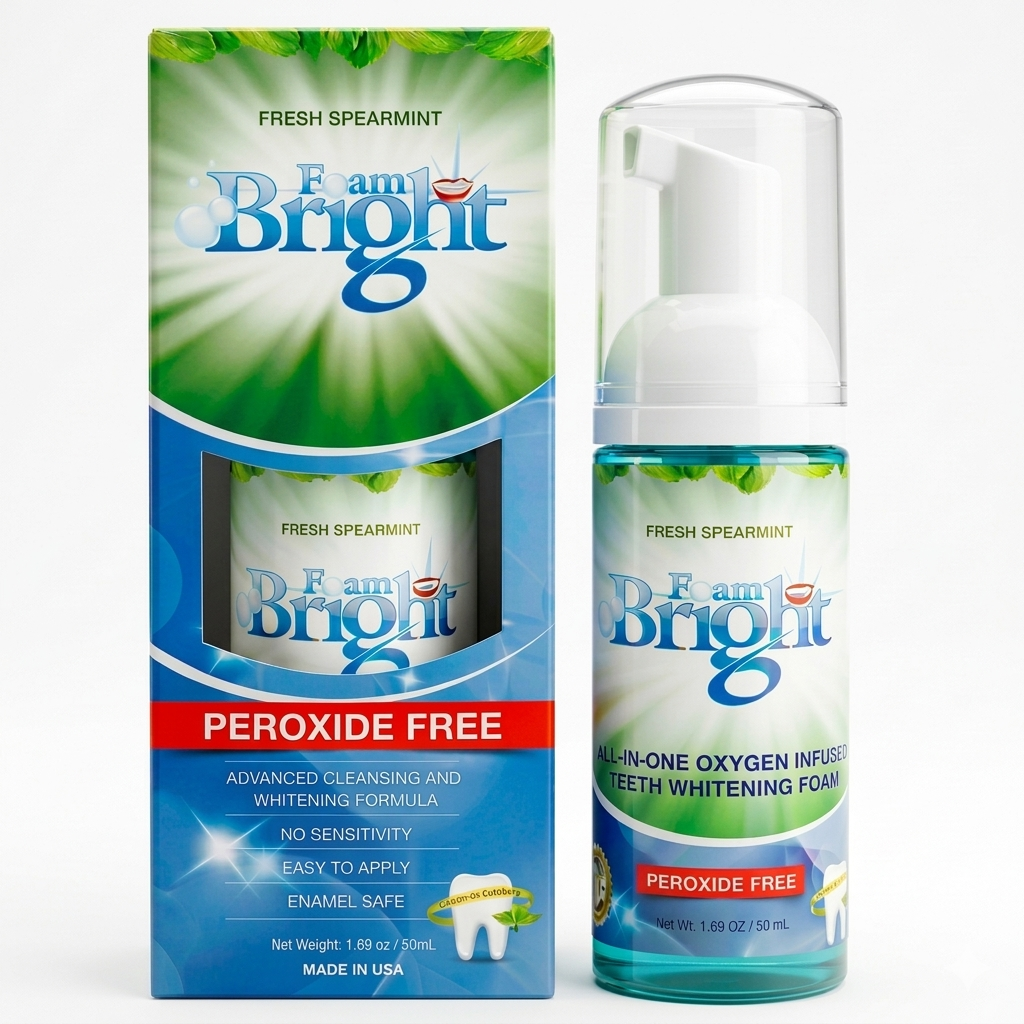
FoamBright is a foaming retainer and aligner cleaner made in the USA by BleachBright. It helps bring the clearness back to cloudy retainers while whitening your teeth as you wear them, something no soak tablet or bar soap can do. Peroxide free. No abrasives. Will not scratch, cloud, or warp thermoplastic trays. Xylitol in the formula helps protect against cavities.
Pump FoamBright onto a soft-bristle brush.
Brush the tray inside and out for 30 seconds, then rinse with lukewarm water.
Brush your teeth with the same foam before reinserting the tray.
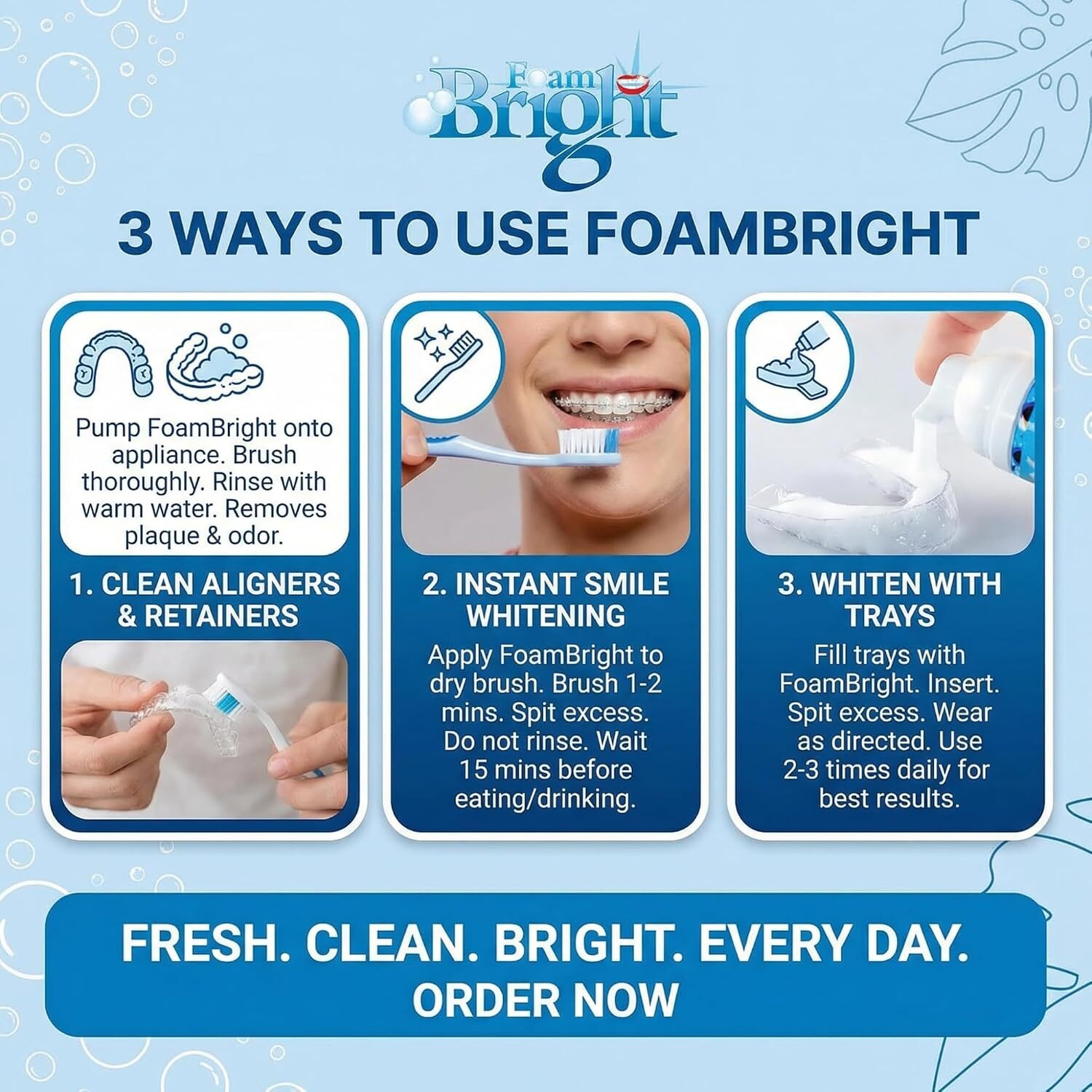
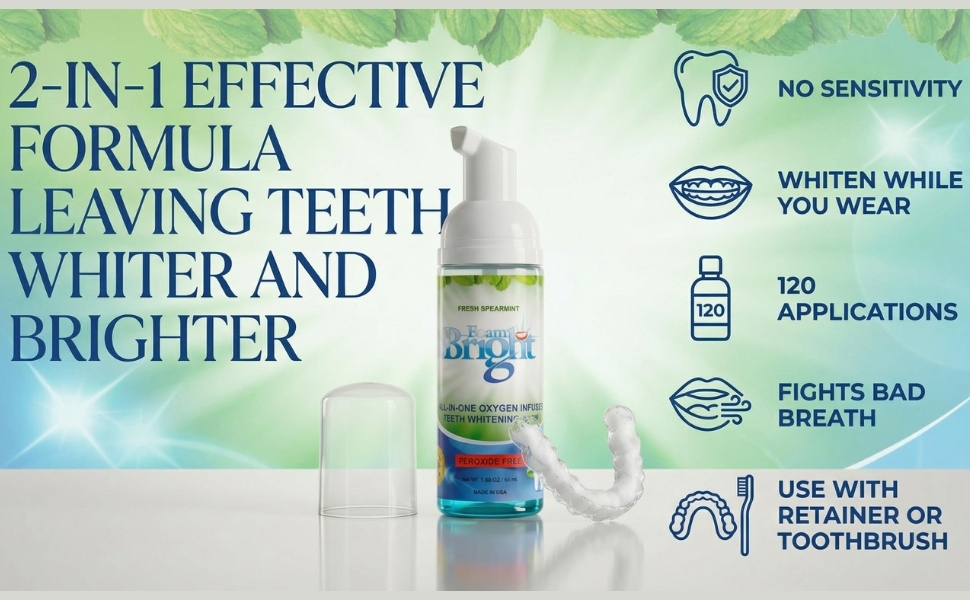
That last step is the difference. Most cleaners treat the tray and ignore the teeth going back into it. FoamBright cleans both in 1 pass, penetrating between teeth and along the gumline with zero sensitivity. 1 bottle holds 120 applications, a full 2-month supply.
Section 07
Frequently Asked Questions
How often should I clean my retainer or aligners?
Rinse trays with lukewarm water every time you remove them, and brush once daily with a non-abrasive foaming cleaner. Add a longer deep clean 1 to 2 times per week. Daily consistency prevents biofilm from hardening into white crust that no soak can remove.
Can I clean Invisalign or aligners with toothpaste?
No. Nearly all toothpaste contains abrasives that carve micro-scratches into thermoplastic. Scratched trays turn permanently cloudy and trap more bacteria in the grooves. Use a non-abrasive foaming cleaner with a soft-bristle brush instead.
Why does my retainer smell even after cleaning?
Persistent odor usually means biofilm is hiding in scratches or the tray is being stored wet in a closed case. Switch to a non-abrasive cleaner, deep clean the edges, and let the retainer dry fully in a vented case overnight.
How do I remove white calcium buildup from a retainer?
Soak the tray in a 50/50 mix of white vinegar and lukewarm water for 15 minutes, then brush gently with a foaming cleaner and rinse thoroughly. This is a rescue step for mineral crust, not a daily routine. Daily foam cleaning prevents the buildup from forming again.
Can I soak my aligners in mouthwash?
No. Colored mouthwash dyes absorb into clear plastic and tint it, and alcohol-based formulas can dry out and weaken the material. If you want a fresh taste, brush trays with a mint foaming cleaner and rinse with lukewarm water.
Is FoamBright safe for Invisalign, Byte, and Candid trays?
Yes. FoamBright contains no abrasives and no peroxide, so it cleans clear aligners and retainers without scratching, clouding, or damaging the plastic. It is compatible with Invisalign, Byte, Candid, ClearCorrect, night guards, whitening trays, and both clear and wire retainers.
FoamBright is made in the USA by BleachBright of Kenner, Louisiana. Questions before you order? Call 866-700-3772 or email CustomerService@BleachBright.com.
Recent Posts
-
How to Whiten Sensitive Teeth Without the Zingers
How to Whiten Sensitive Teeth Without the Zingers If whitening has always meant pain for you, the p …12th Aug 2026 -
How to Become a Teeth Whitening Technician in 2026: The Complete Guide
Become a Dealer Complete Guide · BleachBright · Est. 2006 How to Become a Teeth Whitening Technic …12th Aug 2026 -
Does Baking Soda Whiten Teeth? The Truth
50% OFF the NightBright Kit FREE SHIPPING Code BLOG50 The Truth About Baking Soda Baking Soda …14th Jul 2026